
When it comes to gaming, every little detail counts, and Xbox USB ports are no exception. These underrated heroes of the gaming world are often overlooked but play a crucial role in enhancing the gaming experience. Whether it’s charging controllers or connecting headsets, these ports are the unsung champions that keep the action flowing.
Imagine diving into an epic battle only to find your controller’s dead. Panic sets in as you scramble for a charger. But fear not! With the right knowledge about Xbox USB ports, you can avoid those heart-stopping moments. Let’s explore how these tiny openings can transform your gaming setup from “meh” to “magnificent,” ensuring you’re always ready to conquer the next level without a hitch.
Overview Of Xbox USB Ports
Xbox USB ports play a critical role in enhancing the console’s functionality. Each Xbox model comes equipped with multiple USB ports designed for various tasks. For instance, Xbox One and Xbox Series X
|
S consoles typically feature three USB ports. Some ports are located on the front, while others are found at the back, ensuring easy access for gamers.
Charging wireless controllers poses another essential function of these ports. Gamers can quickly plug in their controllers via a USB cable, allowing for uninterrupted gameplay. The presence of these ports makes sure that players avoid disruptions during intense gaming sessions.
Many headsets also utilize USB connections, providing both audio input and output. Connecting a USB headset enhances the overall gaming experience by delivering clear sound quality and allowing for voice communication. This ensures that players can immerse themselves in gameplay while staying connected with teammates.
In addition to controllers and headsets, USB ports on the Xbox enable connection for external storage devices. Gamers can expand storage capacity by connecting compatible external hard drives. This added space can store games and downloadable content, streamlining access to a larger library of games.
Understanding the functionality of Xbox USB ports can enhance a gaming setup significantly. Familiarity with their locations and uses can prevent unexpected issues during gameplay. Gamers can confidently utilize these versatile ports to improve their overall experience.
Types Of Xbox USB Ports
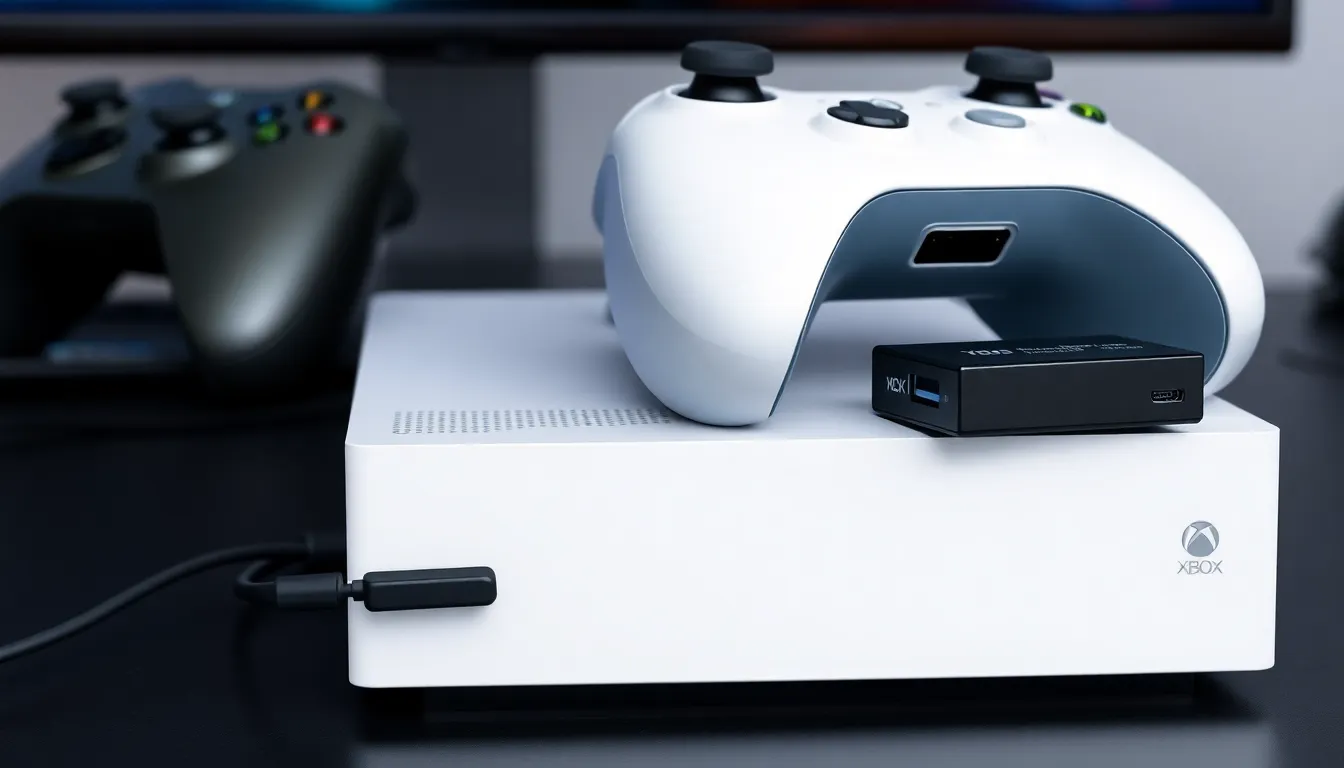
Xbox consoles include different types of USB ports that cater to various needs. Recognizing these types allows gamers to maximize their equipment’s potential.
USB 3.0 Ports
USB 3.0 ports provide faster data transfer speeds, reaching up to 5 Gbps. They significantly enhance gameplay by allowing quicker access to external drives, leading to reduced load times for games. Gamers connect multiple devices, such as external hard drives, without compromising performance. Available on Xbox One and Xbox Series X
|
S models, USB 3.0 ports streamline connectivity. Also, they support backward compatibility with USB 2.0 devices, ensuring versatility for older accessories.
USB 2.0 Ports
USB 2.0 ports operate at a transfer rate of up to 480 Mbps. While slower than USB 3.0, they still offer reliable connectivity for essential devices. Commonly used for peripherals like controllers and wired headsets, these ports ensure seamless interactions during gameplay. Xbox One and Xbox Series X
|
S models include several USB 2.0 ports, allowing easy access in various setups. Overall, these ports remain valuable in managing everyday gaming needs, maintaining compatibility with most accessories available on the market.
Functionality Of Xbox USB Ports
Understanding the functionality of Xbox USB ports enhances the gaming experience. These ports play a crucial role in connecting various accessories.
Connecting Accessories
Accessories connect easily through Xbox USB ports. Controllers plug directly into these ports for charging, while gaming headsets allow for seamless communication. USB hubs can expand these connections, accommodating multiple devices simultaneously. Various accessories like keyboards and mice also enhance gameplay, providing additional control options. Compatibility with a range of USB devices ensures flexibility in personal gaming setups. Players can switch between devices for specific games, creating a customized gaming environment.
Data Transfer Capabilities
Data transfer capabilities significantly impact gameplay. Xbox USB 3.0 ports achieve up to 5 Gbps, enabling rapid file transfers and minimal load times. Gamers benefit from quick access to game libraries and smooth updates. USB 2.0 ports, while slower at 480 Mbps, still function reliably for essential devices. Both port types support backward compatibility, allowing older devices to connect without issues. Efficient data transfer ensures that gameplay remains uninterrupted, enhancing the overall user experience.
Compatibility With Devices
Xbox USB ports support a range of devices, enhancing the overall gaming experience. Understanding which devices are compatible helps gamers maximize their setup.
Supported Controllers
Xbox USB ports accommodate various controllers, including Xbox One and Xbox Series X
|
S options. Controllers charge seamlessly through these ports, ensuring gamers can stay in action without interruptions. Each port connects effortlessly to both wired and wireless models, maintaining compatibility across generations. In addition, advanced accessories, such as the Elite Controller, utilize USB connections to unlock extra features and customization.
External Storage Devices
External storage devices connect directly to Xbox USB ports, improving game library management. Port options like USB 3.0 offer fast transfer speeds for installing and launching games. Gamers expand storage capacity easily, thanks to support for hard drives and solid-state drives. With options available for both older and newer models, external storage solutions eliminate concerns about running out of space. Additionally, enhancing the gaming library becomes straightforward, allowing players to install many games without affecting performance.
Performance Considerations
Understanding performance considerations for Xbox USB ports is essential for optimizing gaming experiences. USB 3.0 ports, available on Xbox One and Xbox Series X
|
S, provide faster data transfer speeds of up to 5 Gbps. This high speed significantly reduces load times, enhancing overall gameplay efficiency. Multiple devices can connect simultaneously without performance degradation, facilitating smooth operation.
On the other hand, USB 2.0 ports operate at a transfer rate of up to 480 Mbps. While slower, these ports adequately support basic functions such as charging controllers and connecting wired headsets. Reliability remains crucial for everyday gaming needs, as these connections ensure essential devices remain operational throughout gaming sessions.
The functionality also extends to connectivity with various accessories. Direct charging for controllers and seamless connection for gaming headsets enhance communication and overall engagement during gameplay. USB hubs provide additional support by allowing multiple devices to be connected, expanding the range of available accessories that can be used.
Compatibility remains a priority across Xbox models. The ability to use accessories from different generations, including the Elite Controller, ensures gamers can take advantage of advanced features. External storage devices can easily connect through USB ports, improving game library management. Fast data transfer speeds from USB 3.0 ports streamline installations and launches, allowing gamers to maintain expansive libraries without performance issues.
Proactive knowledge of Xbox USB ports enhances gaming setups and ensures players are well-prepared. Identifying the appropriate ports for specific devices reduces the chances of unexpected interruptions during gameplay. Consequently, staying informed about these performance aspects supports a more enjoyable gaming experience.
Understanding Xbox USB ports is crucial for any serious gamer. These ports not only charge controllers but also enhance overall gaming experiences by connecting essential accessories. With the right knowledge about USB 3.0 and USB 2.0 capabilities, players can optimize their setups for maximum performance.
Whether it’s expanding storage or ensuring seamless communication through headsets, knowing how to utilize these ports effectively can prevent interruptions during gameplay. By taking full advantage of Xbox USB ports, gamers can elevate their experience and stay prepared for any challenge that comes their way.