When J Balvin’s neon-soaked avatar descended onto Fortnite Island in October 2020, it wasn’t just another celebrity crossover, it was a cultural statement. The Colombian reggaeton superstar brought Latin music to one of gaming’s biggest stages during a time when virtual concerts were redefining how artists connect with fans. Unlike the massive spectacle of Travis Scott’s Astronomical event earlier that year, J Balvin’s collaboration took a different approach: intimate, vibrant, and deeply tied to his artistic identity. The Afterlife Party mode introduced players to a psychedelic playground filled with his music, while exclusive cosmetics let fans rep the artist across Battle Royale matches. Whether you missed the original event or you’re hunting for those limited skins in the Item Shop rotation, here’s everything you need to know about one of Fortnite’s most colorful music collaborations.
Table of Contents
ToggleKey Takeaways
- J Balvin’s Fortnite collaboration brought Latin music and reggaeton culture to gaming’s mainstream stage, proving that virtual concerts could authentically celebrate region-specific artists and underrepresented communities.
- The J Balvin Fortnite Afterlife Party mode prioritized player exploration and repeatability over one-time spectacle, allowing fans to experience the vibrant, color-themed world at their own pace during October 31–November 1, 2020.
- The J Balvin Outfit and bundled cosmetics, priced at 2,500 V-Bucks, featured signature design details like the Colores aesthetic, glow effects, and exclusive emotes that authentically reflected the artist’s brand identity.
- Unlike Travis Scott’s massive, scripted Astronomical event, J Balvin’s Fortnite experience demonstrated that interactive, immersive worlds tied to an artist’s creative vision could resonate just as powerfully with players across different time zones.
- The collaboration had lasting cultural impact by validating that gaming spaces could serve as platforms for authentic musical and cultural representation, influencing future Epic decisions to feature more diverse artists in Icon Series releases.
Who Is J Balvin and Why Did Fortnite Choose Him?
J Balvin (real name José Álvaro Osorio Balvín) is a global reggaeton and Latin trap artist from Medellín, Colombia. By the time Epic Games tapped him for a Fortnite collaboration, he’d already racked up billions of streams, collaborations with Beyoncé and Bad Bunny, and multiple Grammy nominations. His 2020 album Colores hit #2 on the Billboard 200, proving Latin music’s crossover appeal in mainstream markets.
Fortnite’s choice of J Balvin made strategic sense. The game had already proven its concert format worked with Marshmello in 2019 and then shattered expectations with Travis Scott’s 12.3 million concurrent viewers in April 2020. J Balvin represented an opportunity to tap into Latin America’s massive gaming demographic, a market where Fortnite already had deep penetration but hadn’t been culturally acknowledged at this scale.
The timing aligned with Colores, an album where each track was named after and inspired by a different color. That visual-heavy concept translated perfectly to Fortnite’s ability to create wild, saturated environments. Epic wasn’t just booking an artist: they were adapting an existing creative vision into interactive space. The collaboration dropped during Fortnitemares 2020 (the game’s Halloween event), adding another layer of surreal energy to an already trippy concept.
J Balvin also brought genuine gamer credibility. He’d been vocal about playing Fortnite on streams and social media, unlike some celebrity partnerships that felt purely transactional. When the announcement trailer dropped on October 21, 2020, it featured the artist’s signature rainbow aesthetic and hinted at the “Afterlife Party” mode launching October 31st.
The J Balvin Fortnite Concert Experience: A Virtual Music Revolution
How the Afterlife Party Mode Worked
The Afterlife Party wasn’t a one-time scheduled concert like Travis Scott’s event. Instead, Epic created a dedicated Limited Time Mode (LTM) that ran from October 31 through November 1, 2020. Players could queue into it repeatedly, experiencing the roughly 15-minute loop as many times as they wanted during that window.
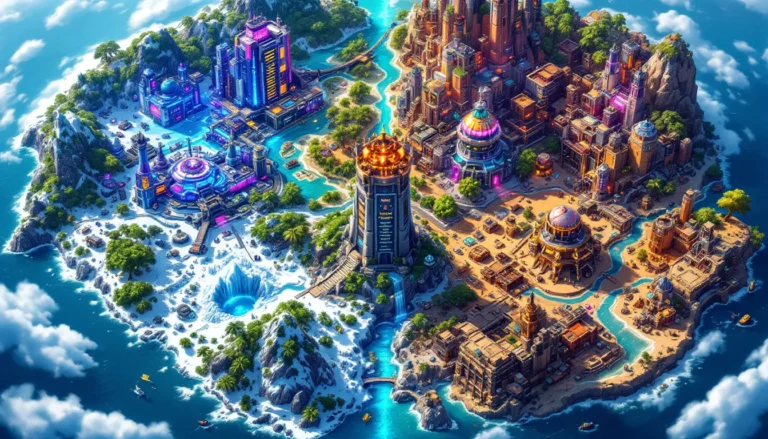
Once loaded in, players spawned on a reimagined version of Believer Beach (then called Sweaty Sands) drenched in J Balvin’s Colores palette, neon pinks, electric blues, vivid yellows. A giant holographic J Balvin avatar dominated the skyline, and the mode played a curated setlist including tracks like “Amarillo,” “Rojo,” and “Morado” from the Colores album, plus hits like “Mi Gente” and “In Da Ghaetto.”
Unlike passive concert experiences, the mode included interactive elements. Players could pick up special items that triggered visual effects, bounce on oversized objects, and explore color-themed zones that shifted as songs transitioned. The map itself reacted to the music, buildings changed hues, objects floated, and particle effects pulsed with the beat. No combat, no storm circle, just pure exploration and vibes.
Epic also hid collectible coins throughout the map. Grabbing all 15 unlocked a special spray, giving completionists something to hunt while vibing to reggaeton. The mode supported up to 50 players per instance, creating a shared social space where squads could experience it together.
What Made the J Balvin Concert Different from Other Fortnite Events
While Travis Scott’s Astronomical was an on-rails, tightly choreographed spectacle with set showtimes, J Balvin’s event prioritized player agency. You could explore at your own pace, revisit the mode multiple times, and focus on whichever visual elements or songs caught your attention. It was less “watch this performance” and more “hang out in this artist’s world.”
The scale was also intentionally different. No giant Travis Scott stomping through the map or reality-bending cosmic trips. J Balvin’s event felt more like stepping into a music video you could walk around in, intimate, colorful, and focused on his specific aesthetic rather than Epic’s usual over-the-top production tricks.
Another distinction: the event ran during Fortnitemares, so players could hop between spooky Battle Royale matches and the Afterlife Party’s candy-colored world. That contrast made both experiences hit harder. The repeatability also meant players in different time zones didn’t have to stress about missing a one-off show, which had been a complaint with earlier concerts.
J Balvin Fortnite Skins and Cosmetics: Complete Overview
The J Balvin Outfit and Styles
The centerpiece of the collaboration was the J Balvin Outfit, an Icon Series skin that launched in the Item Shop on October 21, 2020. Icon Series is Fortnite’s designation for real-world celebrities and creators, previous entries included Ninja, Loserfruit, and TheGrefg.
The skin came with two styles:
- Default Style: J Balvin in his signature look from the Colores era, multicolored oversized hoodie with “COLORES” text, rainbow pants, and his distinctive hairstyle and sunglasses. The outfit radiated the same energy as the album’s promotional material.
- Glow Style: An alternate version where the entire outfit emitted a neon glow effect, perfect for night drops or showing off in dark Creative maps.
Both styles captured his vibrant brand without feeling like a generic celebrity insert. The attention to detail, down to the jewelry and tattoos, showed Epic took the likeness seriously.
Additional Cosmetics from the Balvin Bundle
The Balvin Bundle included several items beyond the skin:
- Board Slide Emote: A built-in emote (exclusive to the J Balvin skin) that played a snippet of his music while the character performed a stylized dance move on a floating board.
- Likeable Emote: A traversal emote featuring choreography inspired by J Balvin’s music video moves, usable by any skin.
- Balvin Cruiser Glider: A rainbow-striped hang glider matching the Colores aesthetic.
- The Smiley Wrap: A weapon wrap covered in colorful smiley faces, simple but cohesive with the overall vibe.
Also, the In Da Party Loading Screen was available separately, showing J Balvin’s avatar towering over the Afterlife Party map.
Epic also released a free spray for anyone who found all 15 coins during the Afterlife Party mode, making it one of the few J Balvin cosmetics available without spending V-Bucks.
How to Get J Balvin Skins (Availability and Pricing)
The J Balvin Bundle originally cost 2,500 V-Bucks (roughly $20 USD when purchasing the $24.99 V-Buck pack). Individual items could be purchased separately if players didn’t want the full set.
Since the collaboration, the skin has returned to the Item Shop sporadically. Icon Series skins don’t follow predictable rotation schedules, they typically return when there’s renewed interest (album drops, tour announcements, or random nostalgia waves). As of March 2026, the skin last appeared in the Shop in late 2025, according to gaming news sources tracking Item Shop rotations.
If you’re waiting for it to come back, enabling Item Shop notifications or following Fortnite leak accounts on social media can give you advance warning. Epic typically announces Icon Series returns a day or two ahead via their official channels.
Step-by-Step Guide: How to Access the J Balvin Experience in Fortnite
The original Afterlife Party LTM was a limited-time mode and is no longer available in standard playlists. But, if Epic re-releases it during an anniversary event or throwback week, here’s how you’d access it:
-
Launch Fortnite and ensure your game is updated to the latest patch. Event LTMs require the current version to appear in your playlist menu.
-
Navigate to the game mode selection screen (the menu where you choose between Battle Royale, Creative, Save the World, etc.).
-
Select “By Epic” or check the featured playlists section on the right side of the lobby screen. Limited-time modes like Afterlife Party appear here when active.
-
Look for “Afterlife Party” or “J Balvin Experience” in the available modes. If it’s live, it’ll have its own tile with artwork.
-
Ready up and queue solo or with your squad. The mode supported full party sizes during its original run.
-
Once loaded in, explore freely. There’s no objective beyond experiencing the music and finding collectibles if they’re part of the re-release.
If the mode isn’t currently available, your best bet is keeping an eye on Fortnite’s official blog and social media for announcements. Epic occasionally brings back popular concert modes during music-themed events or Chapter anniversaries. Some Creative mode builders have also attempted to recreate the Afterlife Party aesthetic, though these fan-made versions lack the official music and interactive elements.
The Cultural Impact: How J Balvin’s Fortnite Event Changed Gaming
Bridging Music and Gaming Communities
The J Balvin collaboration arrived at a pivotal moment in 2020 when physical concerts were impossible and virtual experiences were the only option. While Travis Scott’s event grabbed headlines for its scale, J Balvin’s Afterlife Party demonstrated that music events in games could be more than one-off spectacles, they could be explorable, repeatable spaces.
The event pulled in casual Fortnite players who’d never heard a reggaeton track and J Balvin fans who rarely touched games. Social media lit up with clips of players discovering the mode, parents confused about why their kids were listening to Spanish-language music through their headsets, and Latin American streamers celebrating seeing their culture represented in a mainstream game.
According to coverage from entertainment outlets at the time, the collaboration was viewed as validation that gaming spaces could authentically celebrate non-English music without watering it down. J Balvin didn’t record an English version of his songs for the event, players experienced his music as intended.
Latin Representation in Gaming Spaces
Representation matters, especially in gaming where Latin American players make up a massive demographic but rarely see themselves reflected in AAA titles. The J Balvin event was significant not just because it featured a Latin artist, but because Epic treated it with the same production value as their other Icon Series collaborations.
Latin streamers and content creators reported surges in engagement during the event week. It became a moment of pride, proof that the industry was paying attention. The success likely influenced Epic’s later decisions to feature more diverse artists and creators in Icon Series releases.
The event also sparked conversations in the gaming industry about localization beyond just translating UI text. Industry analysts noted that cultural localization, bringing in region-specific artists, aesthetics, and music, could deepen player connection in ways traditional marketing couldn’t match.
Comparing J Balvin to Other Fortnite Music Events
Travis Scott’s Astronomical Event
Travis Scott’s Astronomical (April 2020) set the gold standard for Fortnite concerts. The event ran five showtimes over three days, pulling in 12.3 million concurrent players at its peak and over 27.7 million unique participants total. Players were taken on a scripted journey, shrinking to microscopic size, riding a roller coaster through space, and watching a giant Travis Scott wade through an ocean.
Astronomical was spectacle-first: tightly controlled, cinematic, and designed to blow minds. J Balvin’s Afterlife Party took the opposite approach, player-driven exploration in a persistent space. Travis Scott’s event felt like a theme park ride: J Balvin’s felt like a club you could wander through.
Production-wise, Astronomical had a bigger budget and more reality-bending effects. But the Afterlife Party’s repeatable format meant players could bring friends who missed the first run or just vibe out multiple times. Both approaches worked, just for different reasons.
Marshmello and Ariana Grande Concerts
Marshmello’s concert (February 2019) was Fortnite’s first major music event. At Pleasant Park’s in-game stage, roughly 10.7 million players watched Marshmello’s avatar DJ a 10-minute set with synchronized visuals. It was groundbreaking but relatively simple, a stage, some lights, and a captive audience.
By J Balvin’s event in late 2020, Epic had learned a lot. The Afterlife Party had more interactivity, longer runtime, and thematic cohesion. Marshmello proved the concept: J Balvin showed how to evolve it.
Ariana Grande’s Rift Tour (August 2021) came after J Balvin and combined elements from both previous approaches. Like Astronomical, it was a multi-day scheduled event with wild visual setpieces. But it also included exploration elements and mini-games between songs, borrowing from the Afterlife Party’s player-agency philosophy.
Each event built on what came before. J Balvin’s contribution was proving that smaller-scale, artist-specific worlds could resonate just as much as reality-shattering spectacles, especially when they stayed true to the musician’s identity.
Tips for Experiencing Future Fortnite Music Events
Fortnite’s music events have become semi-regular occurrences, and Epic keeps refining the formula. Here’s how to get the most out of future collaborations:
1. Check showtimes early and set reminders. Some events run once: others have multiple showtimes across different time zones. Epic usually announces schedules on their blog and social channels 24–48 hours in advance.
2. Log in at least 30 minutes before scheduled events. Servers can get slammed. During Travis Scott’s event, some players couldn’t get into lobbies because instances filled up. Early login = better odds of getting a slot.
3. Adjust your graphics settings beforehand. These events are visually intense. If you’re on lower-end hardware, tweak settings to prioritize frame rate over visual fidelity so you don’t miss moments due to stuttering.
4. Use Party Mode if available. Epic sometimes enables special party features for concerts, synced audio, emote restrictions lifted, etc. Check your lobby settings before queuing.
5. Disable voice chat if you want immersion. Random squad members talking over the music kills the vibe. Mute your fill teammates or go in with friends who respect the experience.
6. Record or screenshot your favorite moments. Fortnite’s Replay Mode doesn’t always capture live events perfectly due to server-side effects. Use built-in recording software (Xbox Game Bar on PC, console capture features) to save clips in real time.
7. Hunt for hidden collectibles. Epic often includes sprays, loading screens, or other freebies tied to event participation or Easter egg hunts. Check community sites for guides if you’re a completionist.
8. Jump back in if the event is repeatable. If Epic runs the event multiple times (like the Afterlife Party), don’t feel pressured to catch everything in one go. Second viewings let you notice details you missed while freaking out the first time.
9. Follow leak accounts cautiously. Dataminers often spoil event details days in advance. If you want to go in blind, mute keywords like the artist’s name or “Fortnite event” on social media the week before.
10. Grab cosmetics during the collab window. Icon Series skins often don’t return for months. If you’re even slightly interested, buy them during the initial run, you can always refund within the return window if you change your mind.
Conclusion
The J Balvin Fortnite collaboration wasn’t the biggest music event in the game’s history, but it was one of the most culturally significant. By giving a reggaeton superstar the same platform previously reserved for EDM and hip-hop artists, Epic signaled that Fortnite’s virtual stage was truly global. The Afterlife Party’s repeatable, exploratory format offered a different kind of experience, less spectacle, more immersion, and proved that not every event needed to be a reality-warping extravaganza to leave an impact.
Whether you were there for the original event or you’re hoping the skin rotates back into the Shop, J Balvin’s Fortnite moment remains a high point in gaming’s ongoing fusion with music culture. It showed that virtual concerts could celebrate specific artistic identities, bring underrepresented communities into the spotlight, and still deliver the kind of memorable experience that keeps players talking years later. As Fortnite continues evolving its live event formula, the Afterlife Party stands as proof that sometimes the best experiences are the ones you can revisit, explore, and make your own.